Bruantech Logo
BRUANTECH

Unlock More Value and Savings for Your Business with Google Cloud

Unlock More Value and Savings for Your Business with Google Cloud

ADMIN
ADMINDesign Director
Published

Unlock More Value and Savings for Your Business with Google Cloud

Technology is no longer simply an operational expense.

For modern businesses, the right technology infrastructure can improve efficiency, reduce costs, support growth, and create opportunities that were previously difficult to achieve.

Cloud computing has become a major part of that shift.

With Google Cloud, businesses can access enterprise-grade infrastructure and services without having to build and maintain everything themselves. More importantly, when implemented strategically, cloud technology can help organizations get more value from their technology investments while keeping unnecessary costs under control.

Move Beyond Traditional Infrastructure

Traditional IT infrastructure often requires businesses to purchase servers, networking equipment, storage, and other hardware before they know exactly how much capacity they will need.

That can create two problems.

Too little capacity can affect performance.

Too much capacity means paying for resources that may sit unused.

Cloud infrastructure changes this model by allowing businesses to access computing resources when they need them and scale them as demand changes.

Instead of making every infrastructure decision around maximum possible usage, businesses can build around actual requirements.

Pay for What You Use

One of the biggest advantages of cloud computing is flexibility.

Businesses can provision resources based on their current workload and increase or reduce capacity as circumstances change.

For example, an e-commerce platform may experience significantly higher traffic during a major sales campaign than during an ordinary week.

Cloud infrastructure can support those changes without requiring the company to permanently maintain infrastructure designed for peak demand.

This can make technology spending more closely aligned with actual usage.

But flexibility alone does not guarantee savings.

Cloud resources still need to be managed carefully.

Cost Optimization Requires Visibility

Moving to the cloud does not automatically make infrastructure cheaper.

Unused resources, inefficient workloads, excessive storage, unnecessary data transfer, and poorly configured services can still generate significant costs.

That is why cloud cost optimization begins with visibility.

Businesses should understand:

Once businesses understand where their money is going, they can make better infrastructure decisions.

Scale Without Rebuilding Everything

Growth should not require a company to constantly rebuild its infrastructure.

Cloud platforms provide services that can support applications as their user base, data, and workloads increase.

A growing business can start with relatively modest infrastructure and expand as demand increases.

This is particularly valuable for startups and growing companies that cannot accurately predict how quickly their products or services will scale.

Instead of making a massive infrastructure investment upfront, they can build progressively.

Automation Reduces Operational Costs

Cloud technology can also create savings by reducing repetitive manual work.

Infrastructure provisioning, deployments, monitoring, backups, scaling, and other operational tasks can be automated.

Automation reduces the amount of time teams spend performing repetitive tasks and allows technical staff to focus on higher-value work.

It also reduces the risk of human error.

A well-designed cloud environment should not require someone to manually intervene every time demand increases or a routine deployment needs to happen.

Data Can Become a Business Asset

Modern businesses generate enormous amounts of data.

Customer interactions, transactions, website activity, operational information, and marketing performance can all provide valuable insights.

Google Cloud provides tools that can help businesses store, process, analyze, and make use of that information.

The objective is not simply to collect more data.

It is to turn data into better decisions.

Understanding customer behaviour can improve marketing.

Analysing operational data can identify inefficiencies.

Studying sales patterns can improve forecasting.

The real value comes from connecting technology investment to business outcomes.

Security and Reliability Matter

Cost savings should never come at the expense of security or reliability.

Businesses need infrastructure that protects sensitive information, controls access, monitors activity, and maintains dependable services.

Cloud platforms provide a range of security and reliability capabilities that businesses can incorporate into their architecture.

However, technology alone does not create a secure environment.

Security still depends on proper configuration, access management, monitoring, backups, and responsible operational practices.

Build for the Business, Not the Technology

One of the biggest mistakes businesses can make is adopting cloud technology simply because it is modern.

The better question is:

What business problem are we trying to solve?

Perhaps the goal is to reduce infrastructure costs.

Maybe the company needs to support rapid growth.

Perhaps it wants better data analytics, improved reliability, faster application delivery, or more efficient operations.

Cloud technology should serve those objectives.

The technology is the means—not the destination.

The Biggest Savings May Not Be on the Infrastructure Bill

Cloud optimization is often discussed purely in terms of reducing monthly infrastructure costs.

But the larger opportunity can come from improving the business itself.

Faster deployments can help teams release products sooner.

Automation can reduce operational overhead.

Better data can improve decision-making.

Elastic infrastructure can support new opportunities without major upfront investment.

Reliable systems can reduce costly downtime.

These benefits may have a much greater impact than simply reducing a monthly cloud bill.

Make Every Cloud Investment Count

Google Cloud can provide businesses with powerful infrastructure, data, AI, storage, analytics, and application services.

But the real advantage comes from using those capabilities strategically.

The goal should not be to use more cloud services.

It should be to create a better relationship between technology, cost, and business value.

When infrastructure is properly designed, monitored, and continuously optimized, businesses can gain the flexibility to grow while maintaining greater control over their technology spending.

Cloud computing is ultimately about more than moving servers somewhere else.

It is about building a smarter foundation for the business—one that can scale, adapt, and create more value over time.

MORE FROM OUR BLOG

Related Articles

Launching Your Ecommerce Venture in 2026: The Complete Starter's Guide
GOOGLE

Launching Your Ecommerce Venture in 2026: The Complete Starter's Guide

Codematic would like to provide you with everything you need for your e-commerce startup in 2023. We understand the difference between starting and starting right.

READ MORE »
Google Workspace vs. Microsoft 365: An In-Depth Look at Pricing and Value for Modern Businesses
GOOGLE

Google Workspace vs. Microsoft 365: An In-Depth Look at Pricing and Value for Modern Businesses

Codematic would like to provide you with everything you need for your e-commerce startup in 2023. We understand the difference between starting and starting right.

READ MORE »
Google AppSheet - The Ultimate No-Code Solution for Your Business
GOOGLE

Google AppSheet - The Ultimate No-Code Solution for Your Business

Codematic would like to provide you with everything you need for your e-commerce startup in 2023. We understand the difference between starting and starting right.

READ MORE »

Schedule A Free
Consultation

We're here to respond to your questions and guide you in selecting the services that best align with your needs.
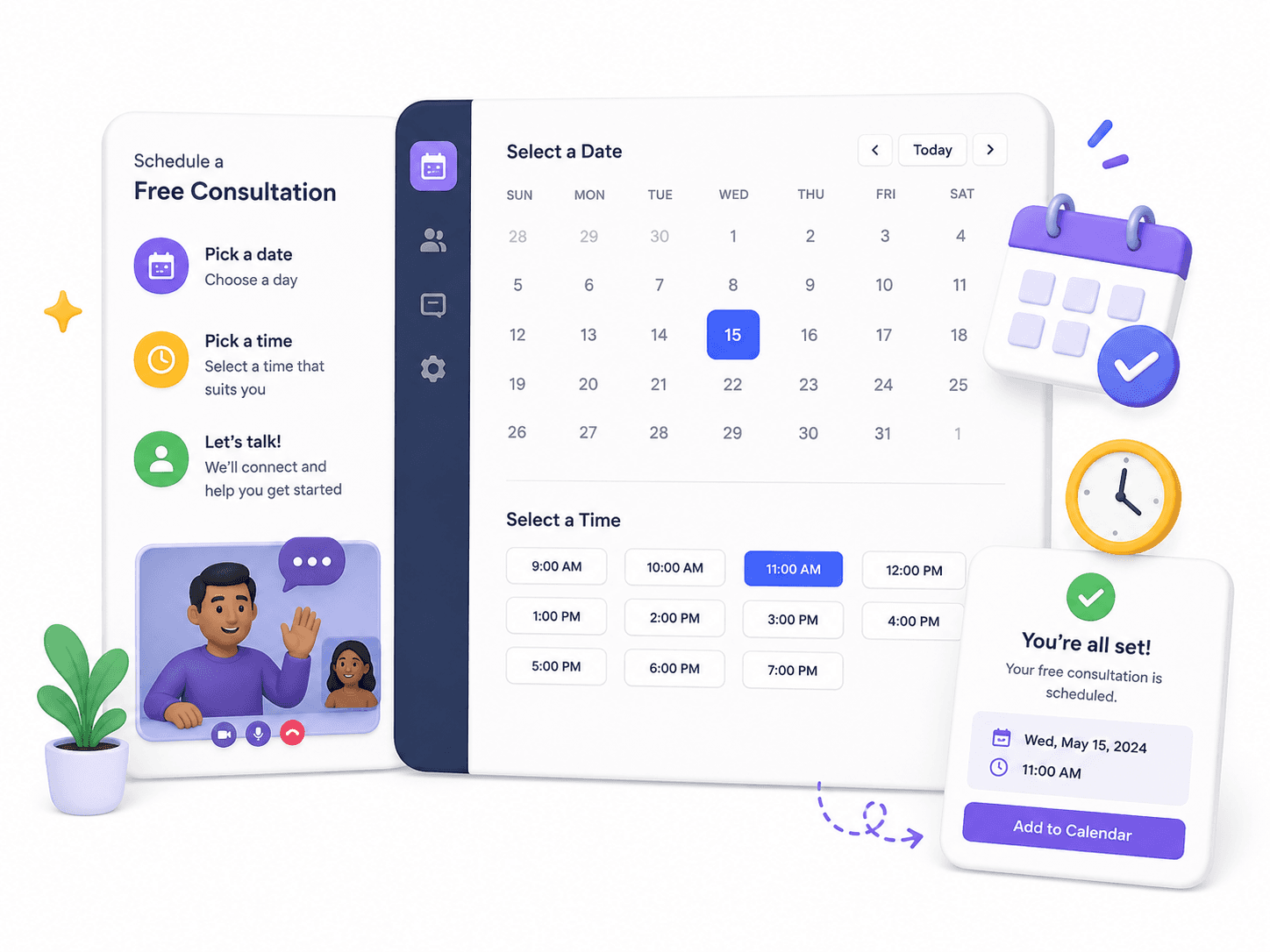
Booking Calendar Interface